Thousands of headstones get a face in The Netherlands
30 apr 2018, 00:13 • Market Garden News (English)
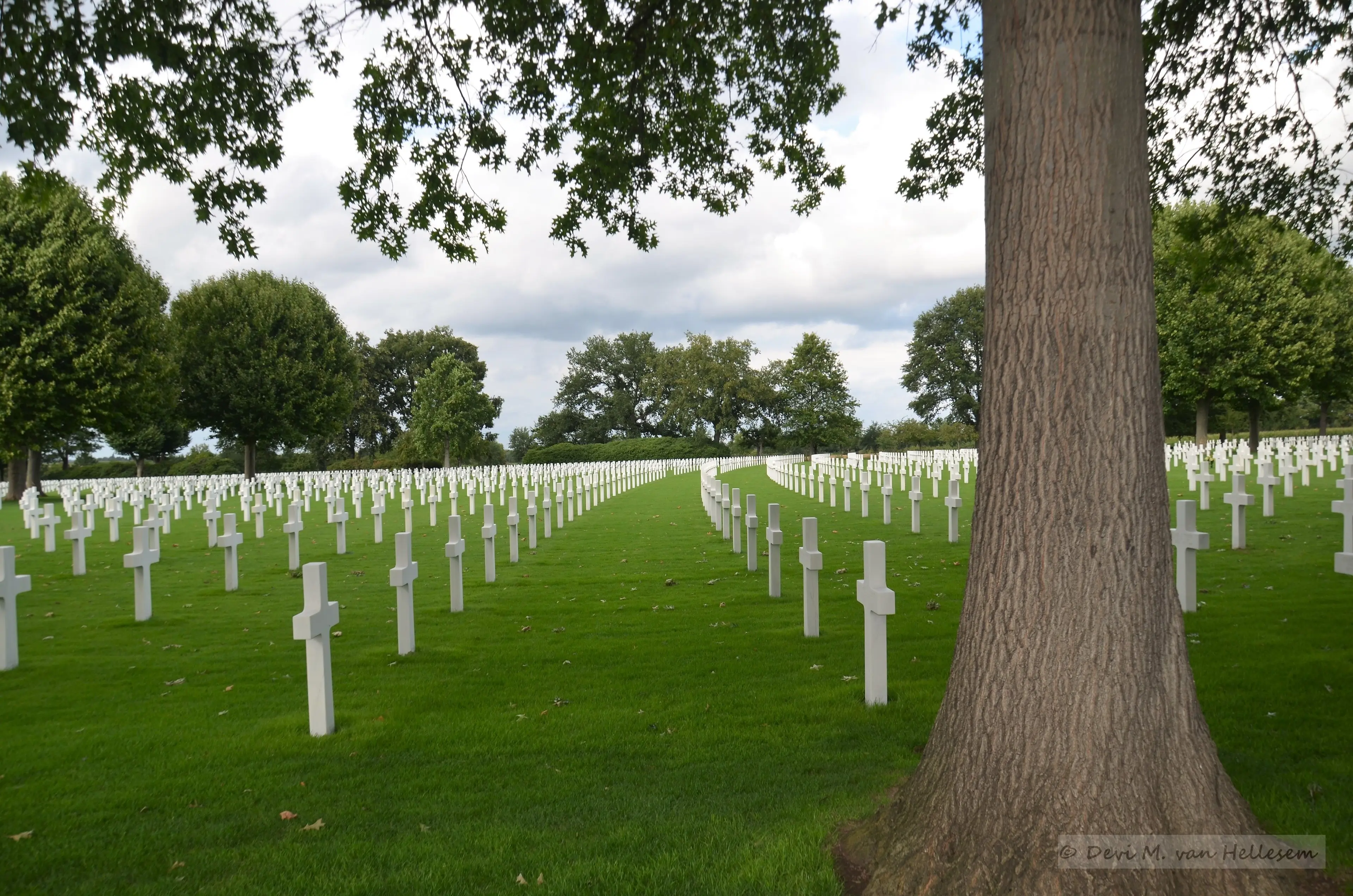
Thousands of headstones and crosses on war cemeteries in the Netherlands will get a face in the years to come. In many places volunteers are trying to collect the life stories and photos of the thousands of victims who are resting on honorary-fields and war cemeteries.
The goal is to ensure that the signs of honour start 'living''. Especially for young people, for whom the second world war is from history books.
Moral reference point
"World War II was so radical and drastic, it still serves as a point of reference in current social issues. It is a moral benchmark. Knowledge of the facts of that terrible war – discrimination, exclusion, lawlessness, destruction on large scale – remains important."
"The challenge is to unlock the experiences of the war for children and young people and make it suitable for their formation as citizens of our multicolored, democratic society.”
That suggests the internet organization WWII Platform, a joint venture of the Netherlands war graves Foundation, the NIOD (Institute for War, Holocaust and Genocide Studies) and the National Comity 4 and 5 May.
Field of Honour
Behind the graves, on the Field of Honour in Loenen there will be standing six hundred people on the 4th of May.
"From the same age and gender as the one who is buried there. Many times this are relatives from the victim.” says Hélène Briaire the Wargraves Foundation.
In Loenen, four-thousand Dutch military who died during the war are buried. "This Field of Honour, Full of Life must make people think: 'this could have been my brother or my sister."
Initiatives like Faces to Graves (Canadian Fields of Honour in Groesbeek , Holten , Bergen op Zoom ) and Voices from Magraten (South-Limburg) must make the thousands of allied liberators who perished, 'human'.
Photograph
Next week, on 5850 of the 8301 American graves in Magraten there will be a photograph from the deceased. With a mobile phone you can listen to the stories from some of them.
"So young people start thinking: 'would I have made that choice?'” the organisation explains.
Also the German War Cemetry in Ysselsteyn
, where 32.000 deceased Germans and 550 ‘wrong’ Dutch people rest, has a school program.
"The interest to commemorate increases every year, while the generation that experienced it, becomes extinct. It is important to keep alive what we have learned." says Platform WWII.
Loading articles...
Loading